Design Governance for Quality Control and Cross Team Coordination
In a multi-designer studio, proofing errors and inconsistent file organization frustrated clients and made handoffs challenging. We implemented a checklist-based system and labeling standards to improve quality, team coordination, and workflow efficiency.
My Role
Graphic Designer
- Contributed to defining design standards
- Helped create reusable templates
- Helped train new designers
- Supported adoption and iteration
Team Goals
- Reduce designer errors in proofs
- Improve cross-team coordination
- Support onboarding and knowledge transfer
- Increase client's confidence in quality
Our Process
While we didn’t formally use a Design Ops framework at the time, our collaborative approach to listening to the team and addressing recurring pain points closely aligns with Design Ops principles. Looking back, this framework provides a clear way to describe how we identified errors, inefficiencies, and handoff challenges across the studio.
1
Problem Recognition
2
Audit & Discovery
4
Review Results
3
Implement Plan
A process allowing for continuous feedback & iteration
1
Recognizing the Problem & Context
In our fast-paced studio, inconsistencies and lack of proofing systems led to errors, rework, and client dissatisfaction. So we asked these questions:
What were the pain points?
Who was affected?
Why is it urgent?
2
Audit & Discovery
How We Work Together - Collaboration & shared understanding
- No shared standards for file naming, layer organization, or project structure
- New designers relied on informal, person-to-person knowledge transfer
- Project owners and clients expressed frustration when avoidable errors reached them, increasing pressure and stress on designers
- Collaboration depended on individuals rather than shared systems, slowing teamwork and onboarding while increasing stress across the team.
How We Get Work Done - Workflow & Execution
- No consistent proofing checklist before files were shared externally
- Inconsistent versioning and labeling across designers
- Personal workflows that didn’t scale across the team
- Without a shared workflow, quality control was inconsistent and risk increased at every handoff.
How We Create Impact - Quality, Trust & Outcomes
- Clients expressed frustration with avoidable errors
- Stakeholders lost confidence in “final” files
- Designers spent time troubleshooting instead of designing
- Preventable issues impacted not just deliverables, but client relationships, team morale, and studio reputation.
3
What We Implemented
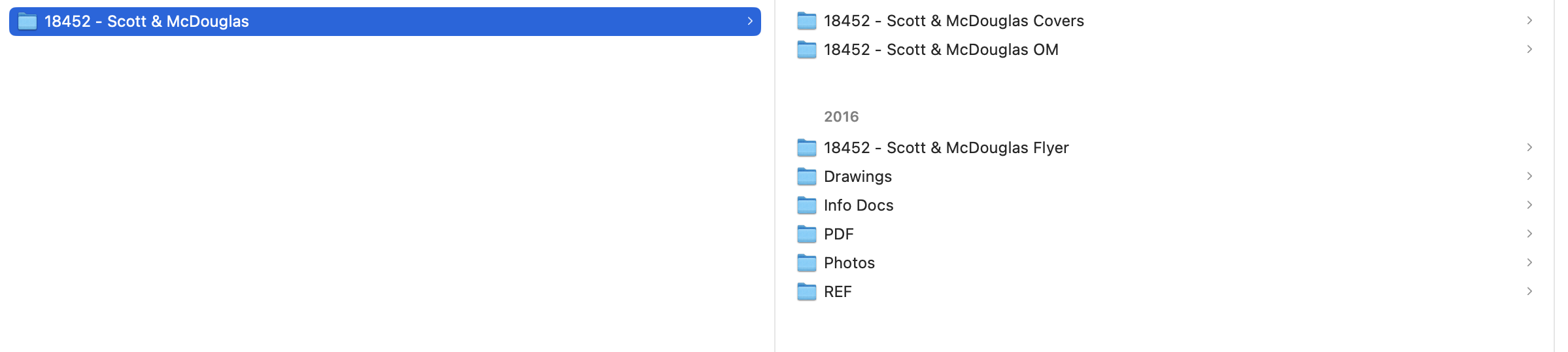
Standardized file and naming conventions
- Shared folder structures, file naming, and layer standards with reference guides for all designers.
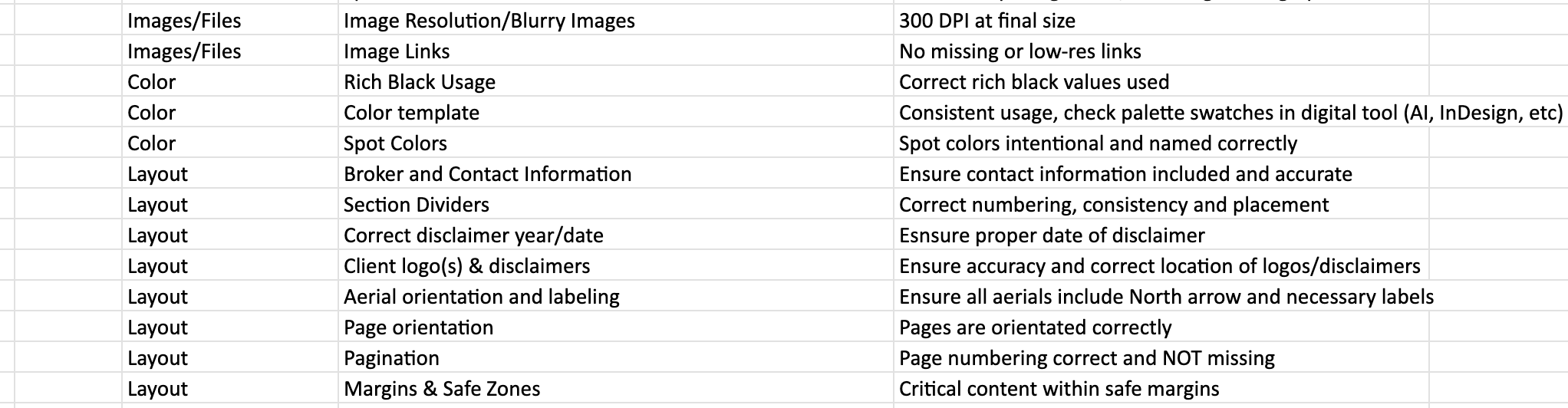
Mandatory digital + print checklists
- Two quality-control checklists to catch common errors before client review or print production.
Reusable templates and reference files
- Templates and example projects to support complex work and speed up setup.
Clear ownership and support structure
- Defined go-to leads for design and print questions.
4
Reviewing Our Results
Fewer errors and revisions
- Reduced rework during client approvals and print production
Faster, Smoother handoffs
- Designers could pick up projects without rework or guesswork
Improved onboarding
- New designers ramped faster using shared standards
Increased client confidence
- More consistent output and fewer last-minute issues